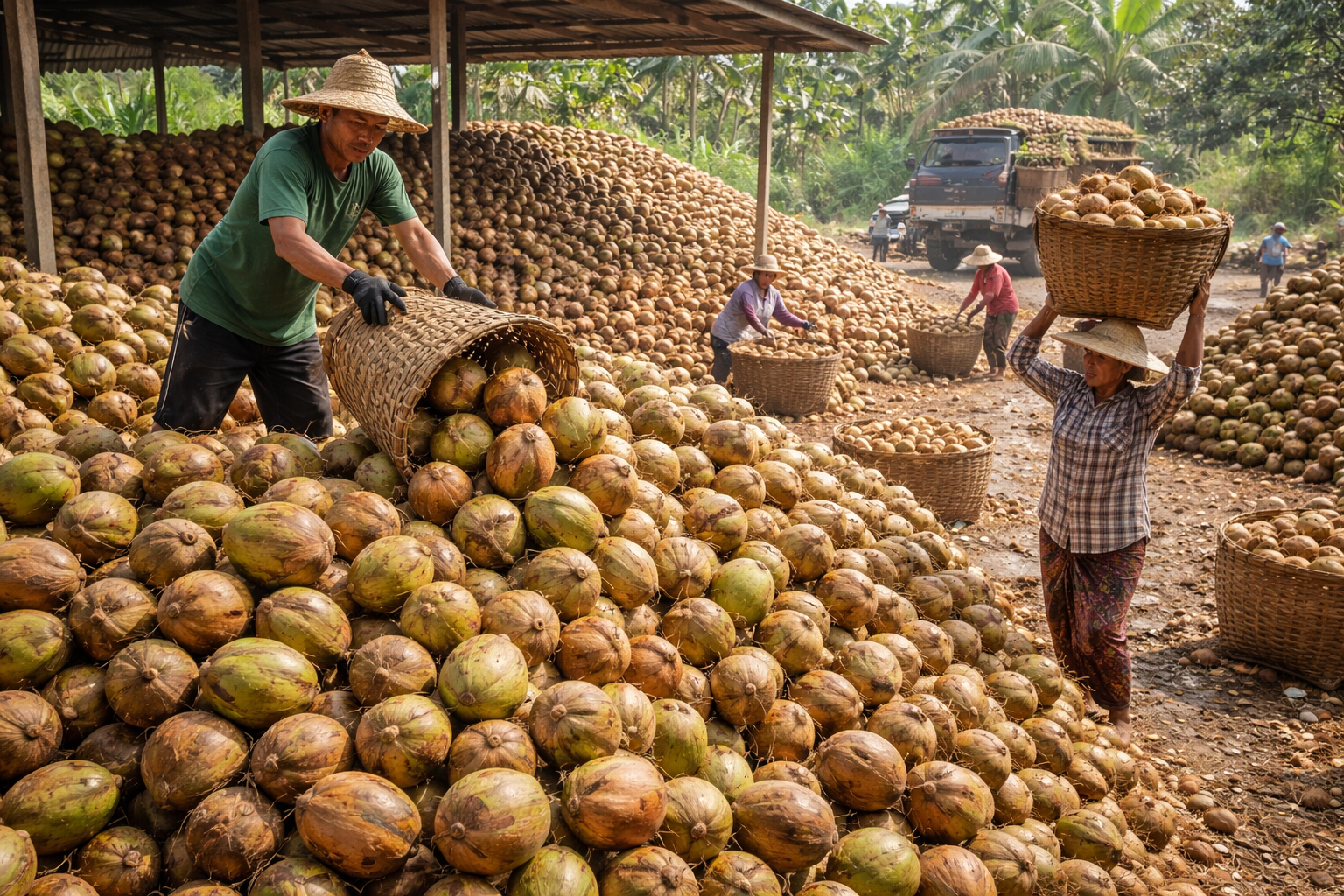
Sourcing raw mature husks
We process and supply high-quality coconut husk derivatives from Indonesia. From Low-EC washed Coco Peat for commercial hydroponics to durable Coir Fiber for industrial manufacturing, we deliver sustainable solutions globally.
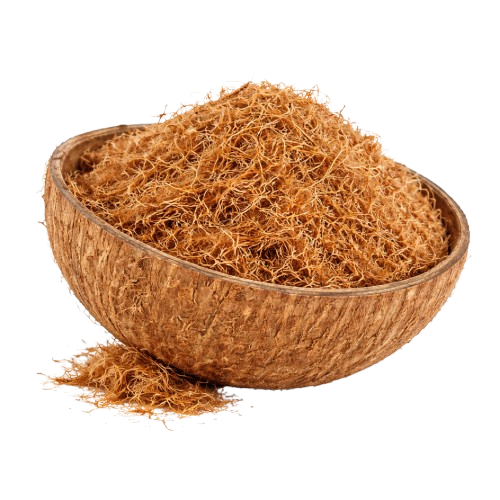
The thick outer husk of the coconut is a treasure trove of agricultural and industrial materials. Through careful decortication, we separate the valuable components for specific industry needs.
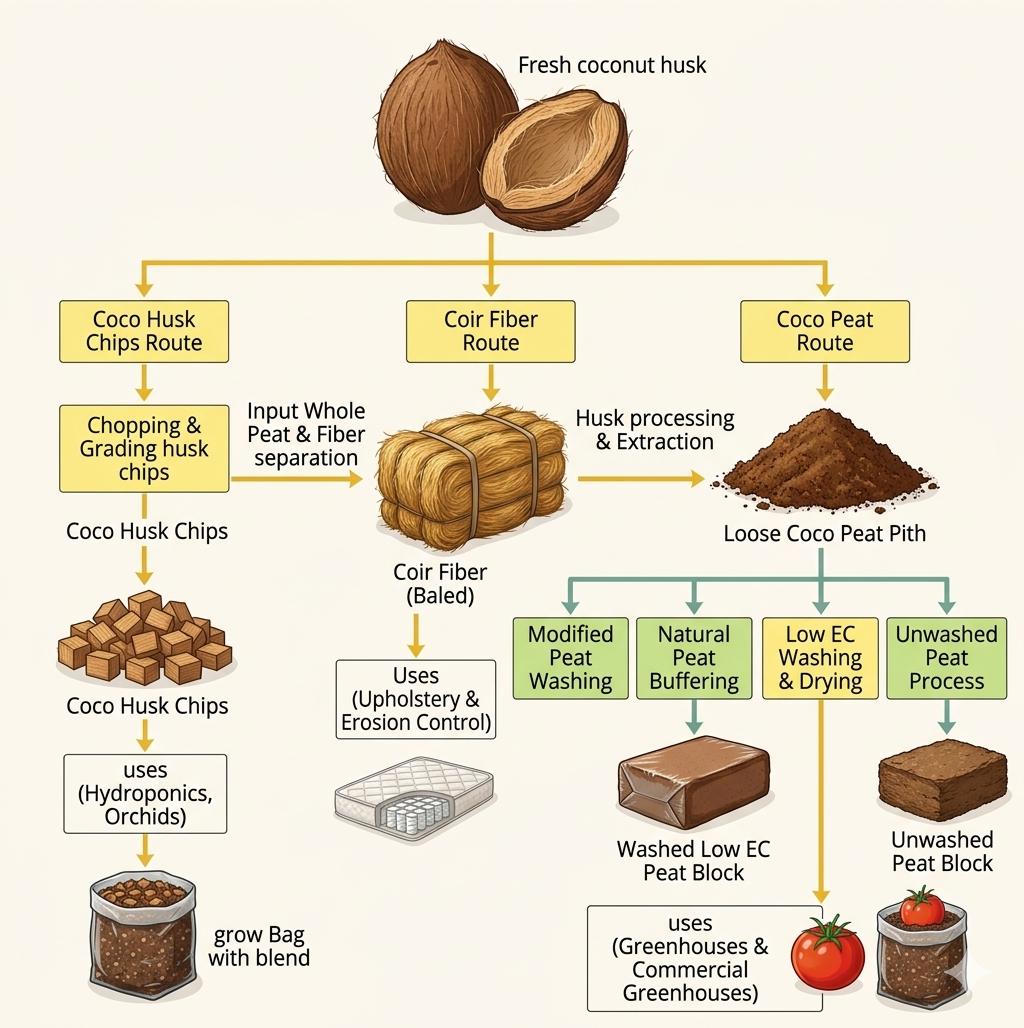
The raw coconut husks are fed into a decorticator machine, which beats and tears the husks apart. This process separates the long, strong bristle fibers (Coco Fiber / Coir) from the spongy, dust-like binding material (Coco Peat / Pith).
Alternatively, whole husks can be chopped into uniform cubic pieces to create Coco Husk Chips, which provide excellent aeration for orchids and aroids.
Raw coco peat naturally contains high levels of sodium and potassium salts (High EC), which can burn plant roots.
Our coir products serve diverse markets, from advanced agriculture to heavy manufacturing.
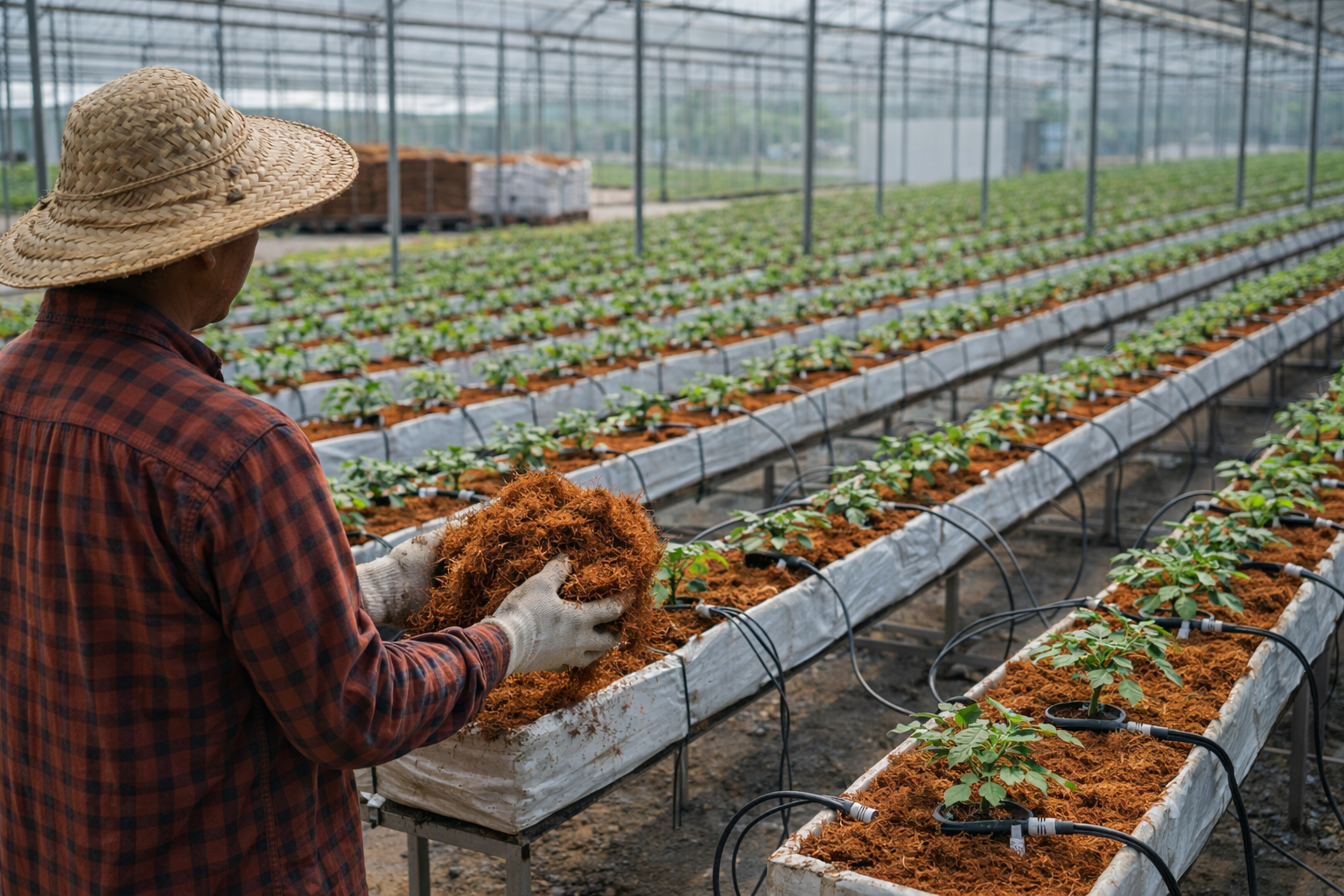
Low-EC Coco Peat blocks and grow bags are the world's leading sustainable substrate for commercial greenhouses, soft fruits, and indoor farming.
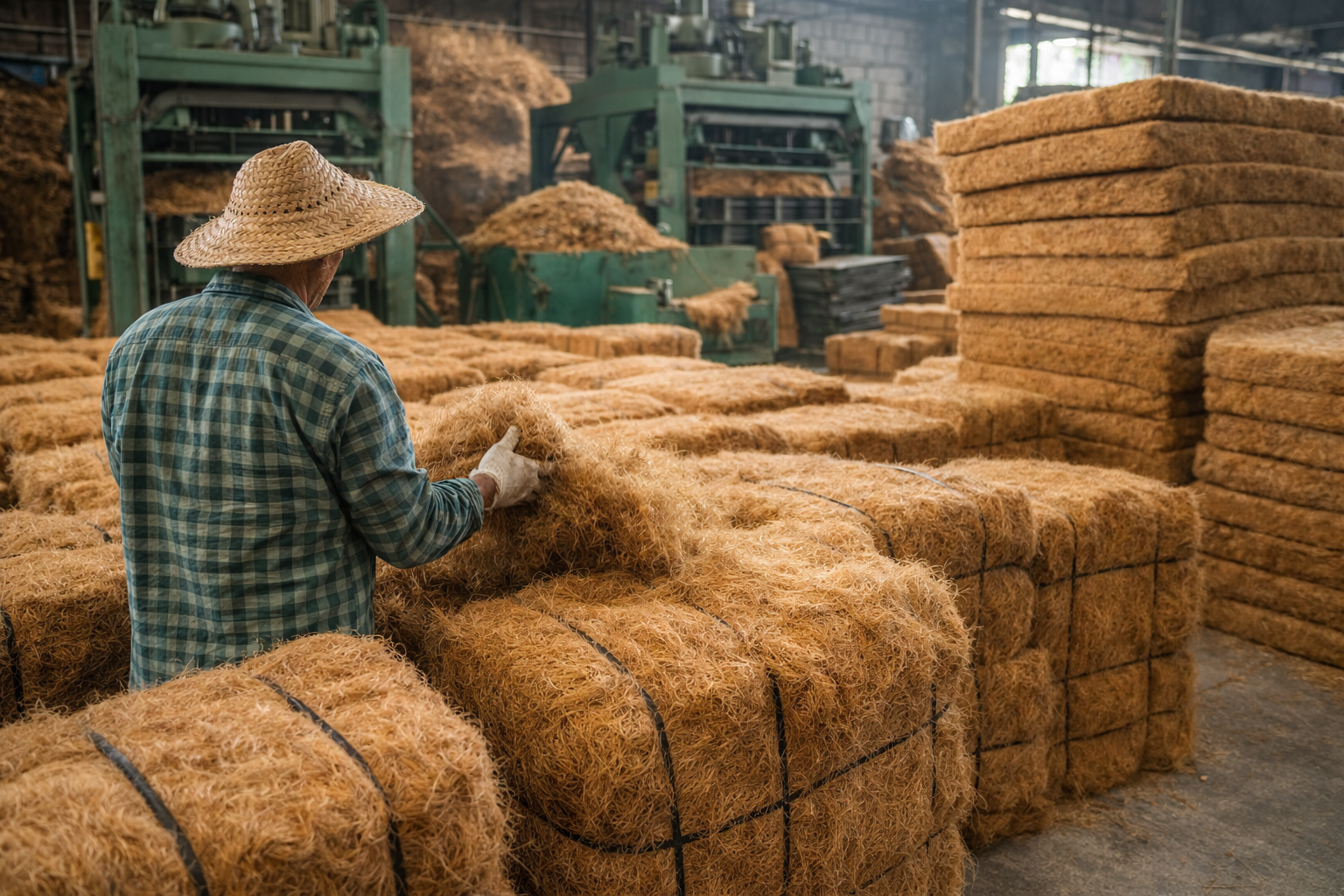
Baled Coco Fiber (Golden Brown Coir) is prized for its natural resilience and durability, used extensively in mattresses, upholstery, and car seats.
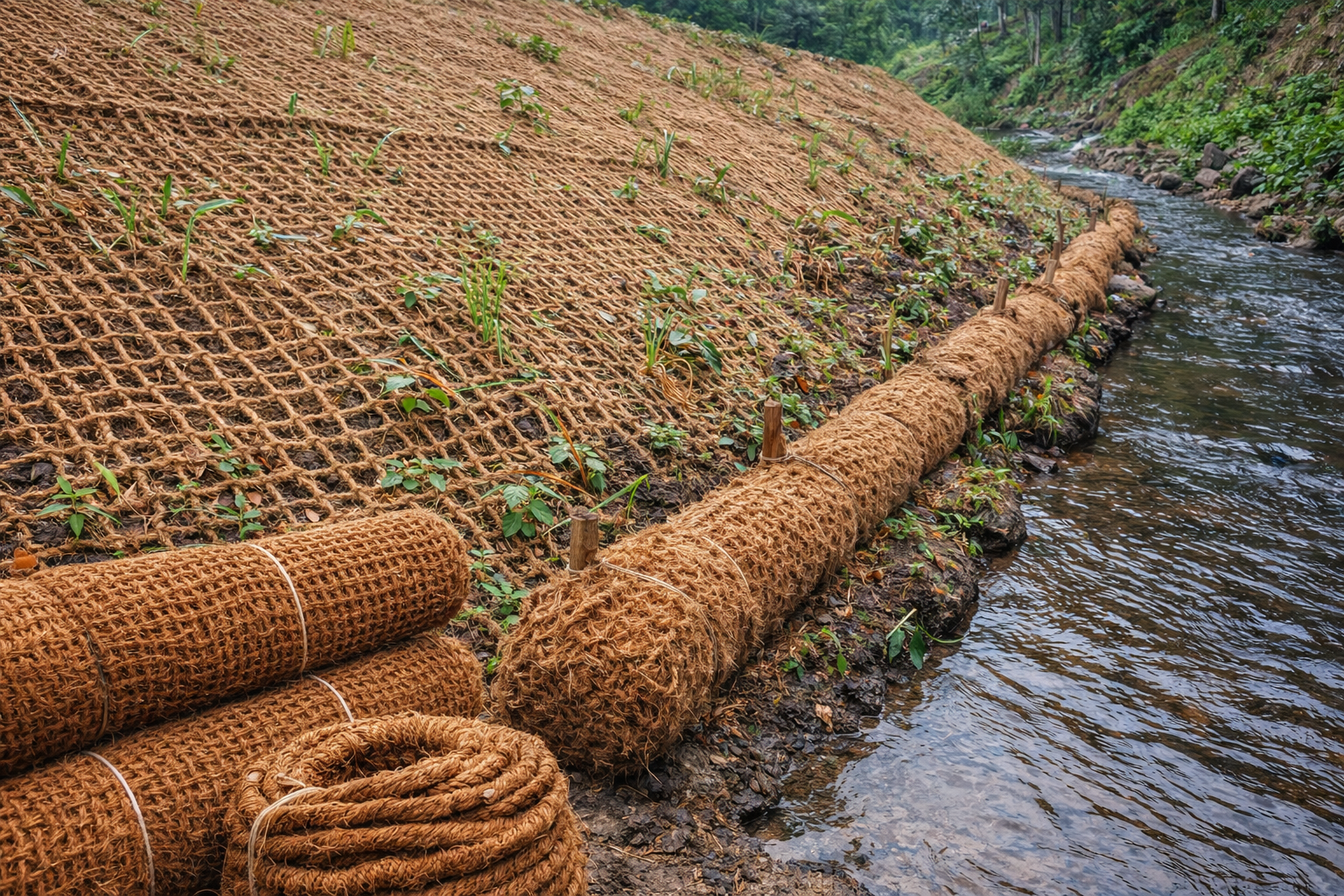
Coir yarn and fibers are woven into biodegradable netting and logs to stabilize slopes, prevent soil erosion, and promote vegetation growth.
A quick overview of our flagship 5kg Coco Peat Blocks.
A glimpse of our collection, decortication, drying, pressing, and export preparation.
Sourcing raw mature husks
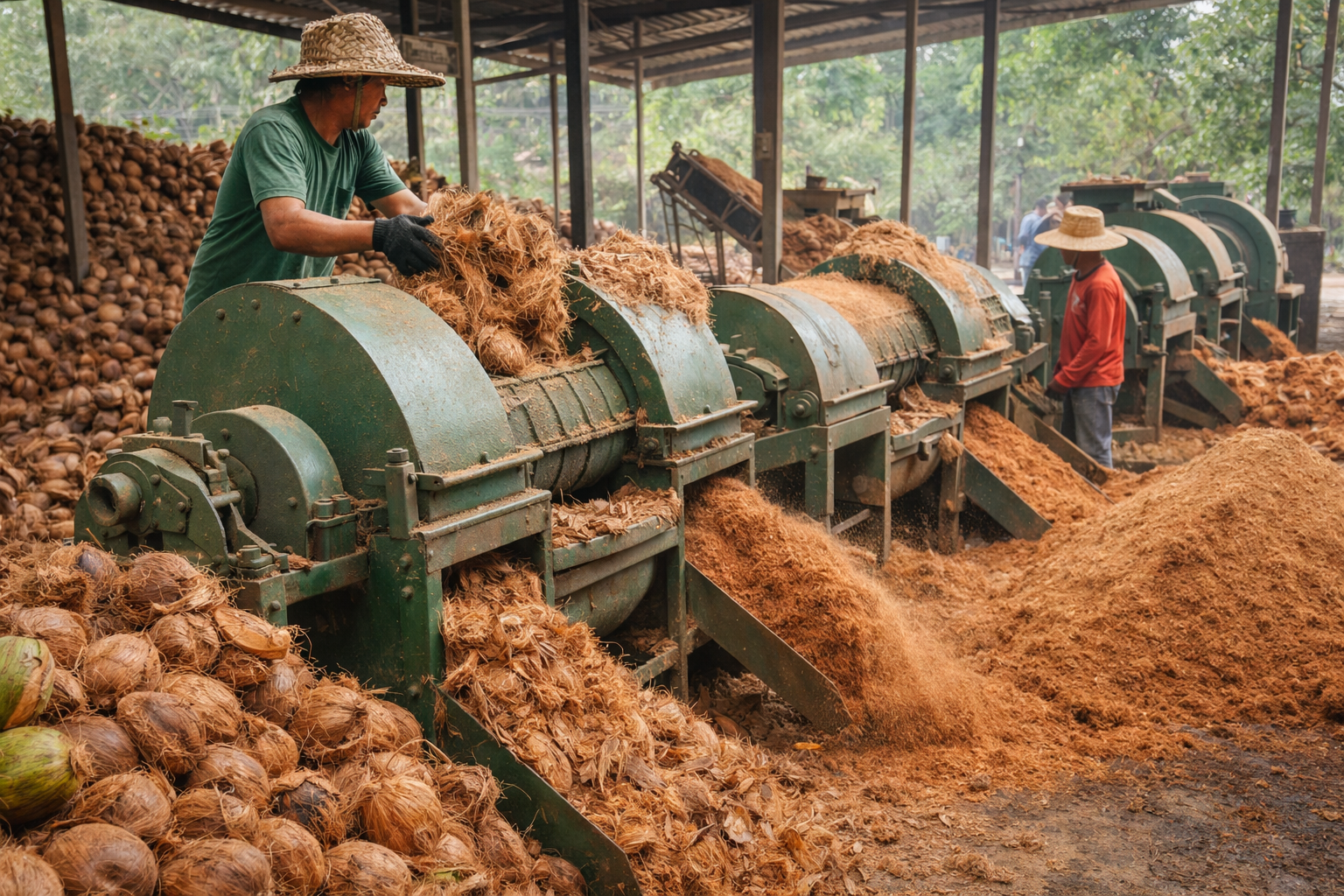
Machine decortication & separation
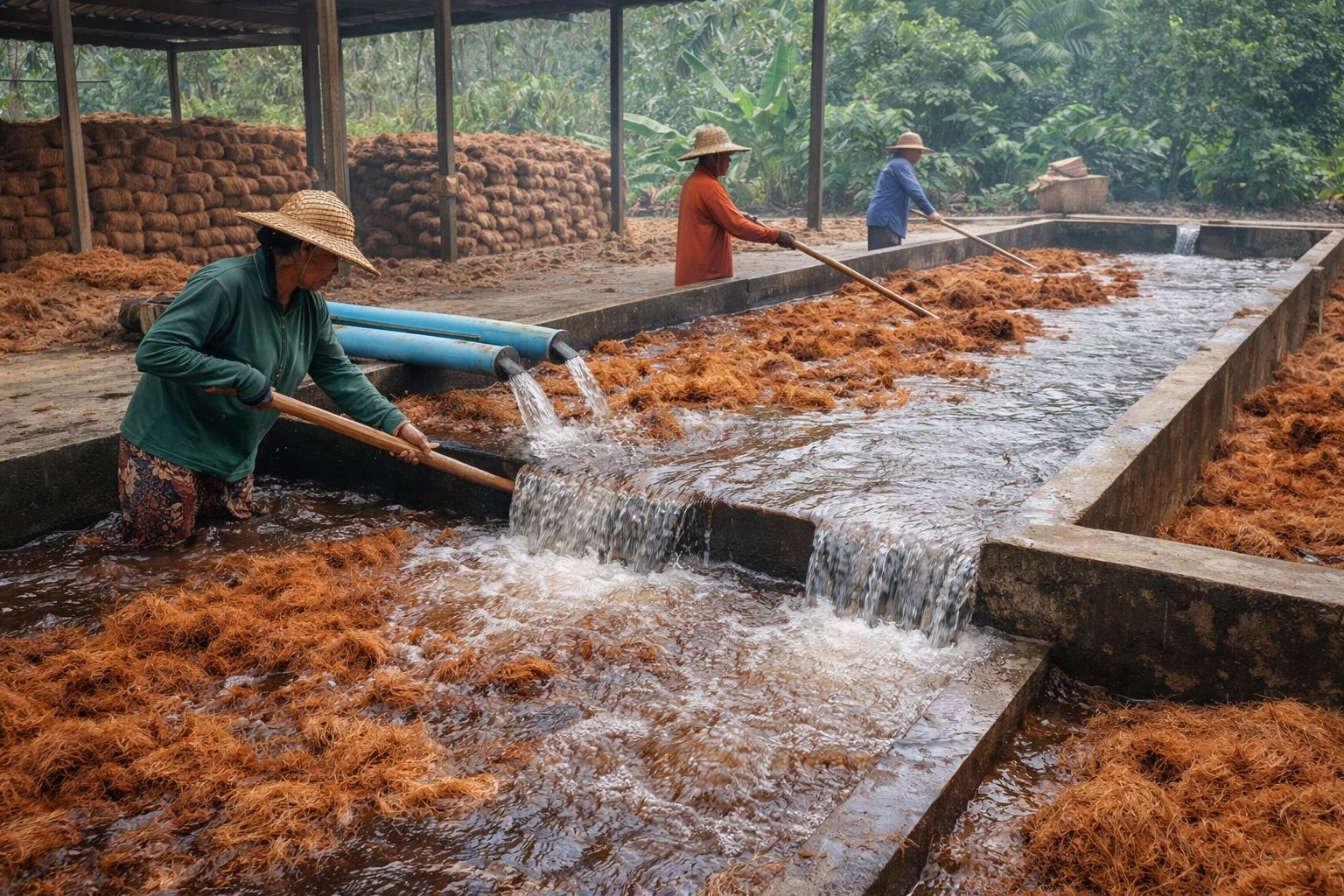
Freshwater washing (Low EC process)
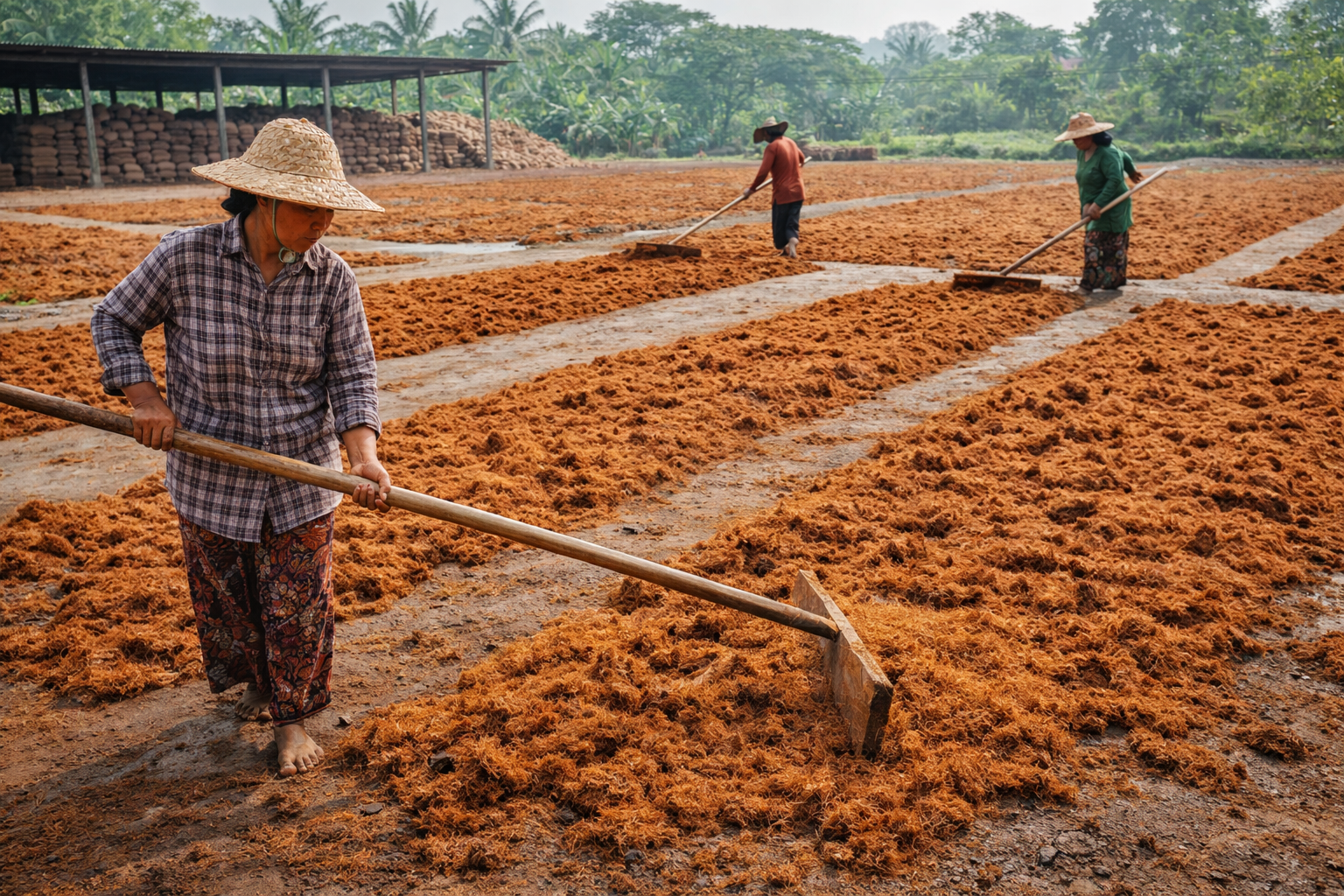
Spreading and sun-drying the peat
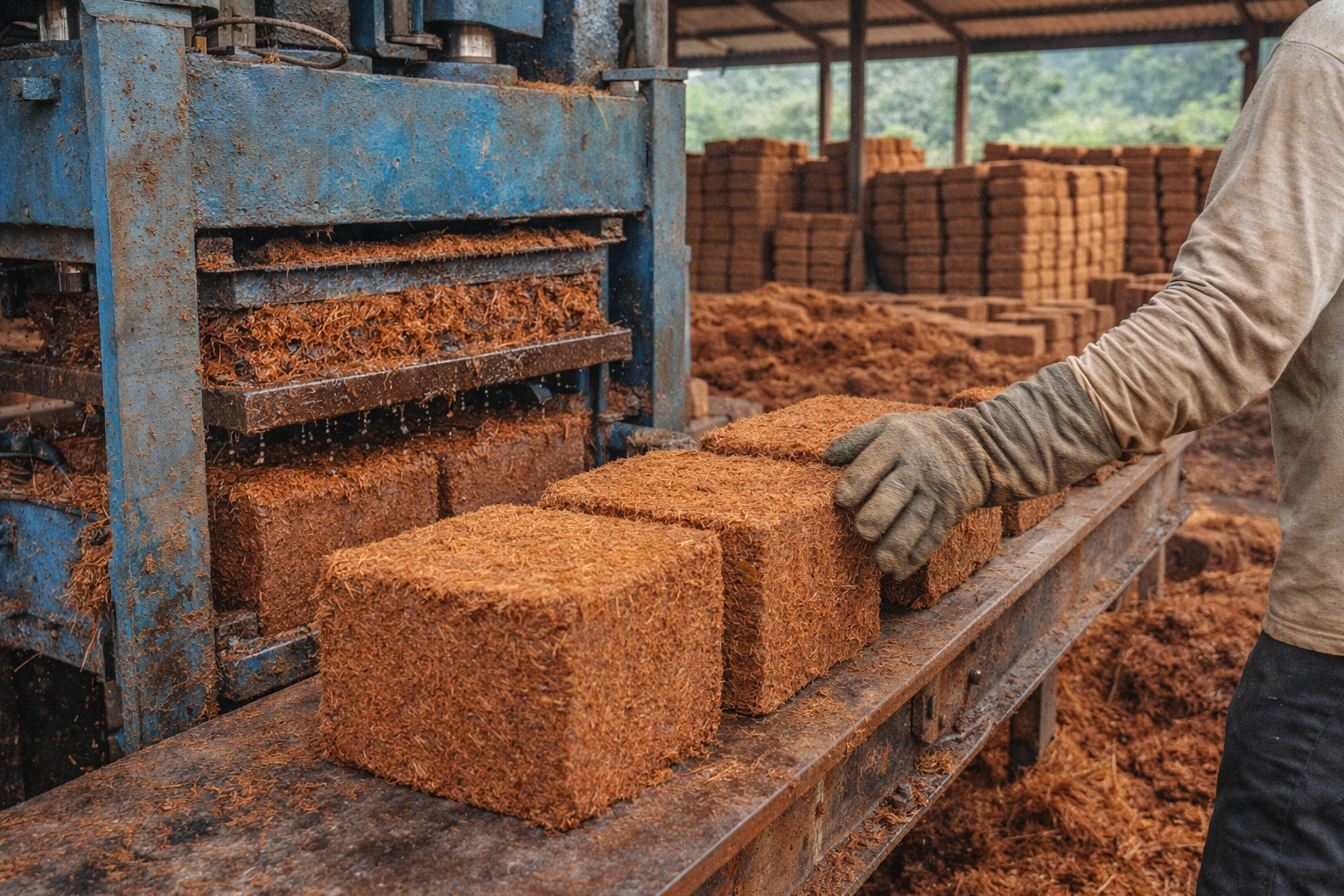
Hydraulic pressing into 5kg blocks
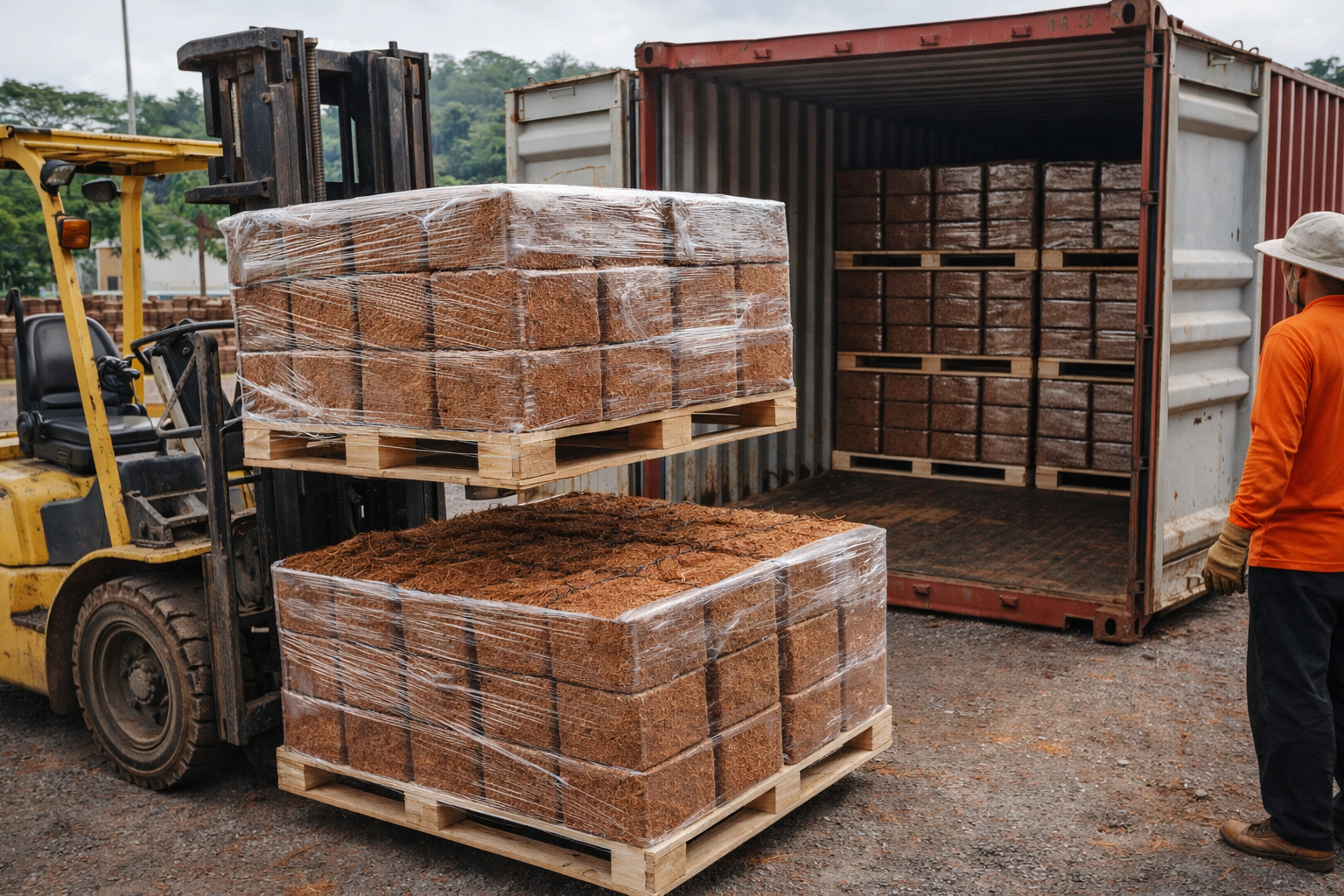
Palletized packing & container loading
Coconuts naturally absorb salts from the tropical soil. Unwashed Coco Peat retains these salts (High EC) and is generally used for animal bedding or absorbing oil spills. Washed Coco Peat is flushed with fresh water to remove salts (Low EC 0.5), making it safe and ideal as a growing medium for sensitive plant roots.
When hydrated with water, a standard 5kg block of our compressed Coco Peat will rapidly expand to yield approximately 70 to 75 liters of fluffy, usable growing substrate.
Yes, our Coco Fiber (Golden Brown Coir) is hydraulically pressed into tight bales weighing between 100kg to 125kg each. This maximizes loading efficiency for 40ft HC containers, which can hold up to 18-20 metric tons of fiber.
Coco Husk Chips are diced pieces of the whole husk. They retain water while providing massive air pockets. They are highly sought after by orchid growers, aroid (Monstera, Philodendron) nurseries, and terrarium enthusiasts to prevent root rot.
Yes. We can supply pre-filled UV-treated plastic Grow Bags containing specific blends of Coco Peat and Coco Chips (e.g., 70% Peat / 30% Chips) commonly used for commercial tomato, strawberry, and cucumber farming.
To ensure cost-effective shipping for bulk agricultural commodities, our MOQ is one 40ft High Cube container. We can arrange mixed containers (e.g., half blocks, half fiber) upon request.
Whether you need Low-EC Peat for your greenhouse, or baled Fiber for manufacturing, let us know your required volume, specifications, and destination port.
Contact Us